







Walk into the yoghurt aisle and you’ll find a lot of choices. In fact, there are at least 32 different strawberry yoghurt pouches available across Australia’s major supermarkets.
They may all look fairly similar, but the ingredients, sugar, protein, calcium, price and nutritional value can vary considerably.
Daily Serve Nutrition did the hard work and compared the options side by side. We’re breaking down the findings for Sinchies parents, so you can make the choice that works for your child, budget and routine.
This article is based on the original comparison by Daily Serve Nutrition. Product information and prices can change, so always check the packaging when purchasing.
Are yoghurt pouches a healthy snack for kids?
Flavoured yoghurt pouches can absolutely have a place in a child’s diet. They’re convenient, easy for kids to eat and can provide valuable nutrients, including protein and calcium.
They can also be a more nutritious choice than many other packaged snacks.
But not all yoghurt pouches are nutritionally equal. Some contain added sugar, fruit juice concentrate, sweeteners, thickeners or longer ingredient lists. Others are made with relatively simple ingredients and no added sugar.
It’s also worth remembering that nutrition is about your child’s overall eating pattern—not one individual snack.
If a flavoured yoghurt pouch helps your child enjoy dairy or makes a busy morning easier, that’s still a positive.
What should parents look for?
Instead of focusing on one number, look at the complete nutritional picture.
1. Check the ingredients
A shorter ingredient list can make it easier to see exactly what you’re buying.
Plain yoghurt will generally contain milk and live cultures, while flavoured varieties may also include:
-
Strawberry puree or pulp
-
Sugar
-
Fruit juice or fruit juice concentrate
-
Natural flavours
-
Colours made from fruit or vegetable concentrates
-
Thickeners and stabilisers
-
Sweeteners
An unfamiliar ingredient name doesn’t automatically make a product unsuitable. Sometimes the same ingredient is simply presented differently on different labels.
For example, vegetable gums 440 and 410 are pectin and locust bean gum, while mineral salt 333 is calcium citrate.
2. Look beyond “no added sugar”
Milk naturally contains a sugar called lactose, so even plain, unsweetened yoghurt will show sugar on the nutrition panel.
Strawberry puree and pulp also contain naturally occurring sugar.
“No added sugar” therefore does not mean “sugar-free.” It means sugar hasn’t been added as a separate ingredient. Some no-added-sugar products may use sweeteners instead, so it’s still worth reading the complete ingredients list.
In the Daily Serve Nutrition comparison, the strawberry pouches with the highest total sugar generally included added sugar. Several also contained fruit juice or fruit juice concentrate, which contributes to the total sugar content.
3. Consider calcium
Calcium is important for growing bones, making yoghurt a useful addition to many children’s diets.
The amount of calcium varied significantly between the pouches in the comparison. Some provided more than 200mg per 100g, while others contained closer to 100mg.
If yoghurt is one of your child’s regular calcium sources, compare the calcium amount per 100g rather than relying only on claims on the front of the pouch.
4. Don’t get distracted by protein marketing
High-protein yoghurt can be useful for adults, active teenagers or people with higher protein needs. However, most younger children don’t need a specialised protein yoghurt.
Children generally have lower protein requirements than adults and can usually get enough across their regular meals and snacks.
High-protein pouches were also among the more expensive products in the comparison. If extra protein is important to your family, larger tubs of plain high-protein Greek yoghurt may offer similar nutrition with simpler ingredients and better value.
Which strawberry yoghurt pouches were better options for kids?
For times when you want the convenience of an individual flavoured pouch, Daily Serve Nutrition highlighted several options with no added sugar and comparatively suitable nutritional profiles for children:
-
Brooklea Kids No Added Sugar Strawberry Greek Style Yoghurt
-
Woolworths Kids No Sugar Added Strawberry Yoghurt
-
Jalna Kids All Natural Strawberry Yoghurt
-
five:am Organic Strawberry Yoghurt
-
Tamar Valley Kids Strawberry Greek Style Yoghurt
This doesn’t mean these are the only suitable choices—or that every child needs the same yoghurt.
The best option will depend on your child’s tastes, nutritional needs, allergies, budget and what is available at your supermarket. A yoghurt your child will happily eat can be more useful than one that repeatedly comes home untouched.
What about lactose-free yoghurt pouches?
Some yoghurt pouches have the lactase enzyme added to help break down lactose, which may make them easier to digest for people with lactose intolerance.
However, lactose intolerance and a cow’s milk allergy are not the same thing. A lactose-free dairy yoghurt still contains milk proteins and is not suitable for someone with a cow’s milk allergy.
If you’re unsure what is suitable for your child, speak with your GP or an accredited practising dietitian.
The best everyday option for many kids
For most younger children, plain full-fat yoghurt with a simple ingredient list, no added sugar and a good amount of calcium is hard to beat.
You can add flavour naturally with:
-
Mashed or pureed strawberries
-
Banana
-
Blueberries
-
Mango
-
Stewed apple
-
Cinnamon
-
Nut or seed butter, where suitable and permitted
This gives you more control over the ingredients while still allowing you to adjust the flavour to suit your child.
The cost of convenience
There’s no denying that individual pouches are handy - but you’re usually paying more for the convenience and additional packaging.
In the original comparison, supermarket-brand pouches were among the most affordable ready-made options, ranging from approximately $0.90 to $1.27 per 100g at the time.
However, buying a larger tub and portioning it yourself can often reduce the cost per serve while creating less single-use packaging waste.
Make your own yoghurt pouches
If your kids love eating yoghurt from a pouch, you don’t have to give up the convenience.
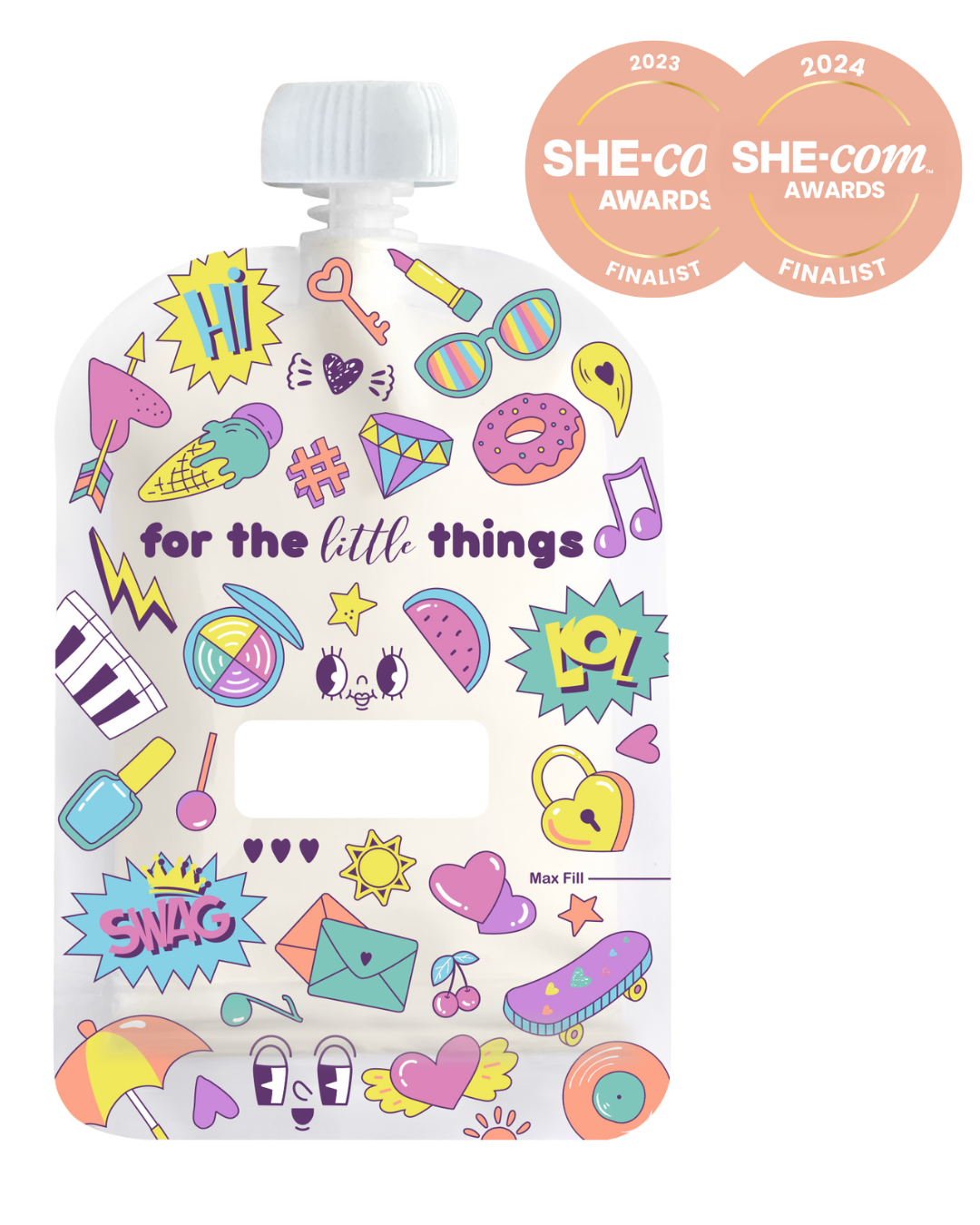
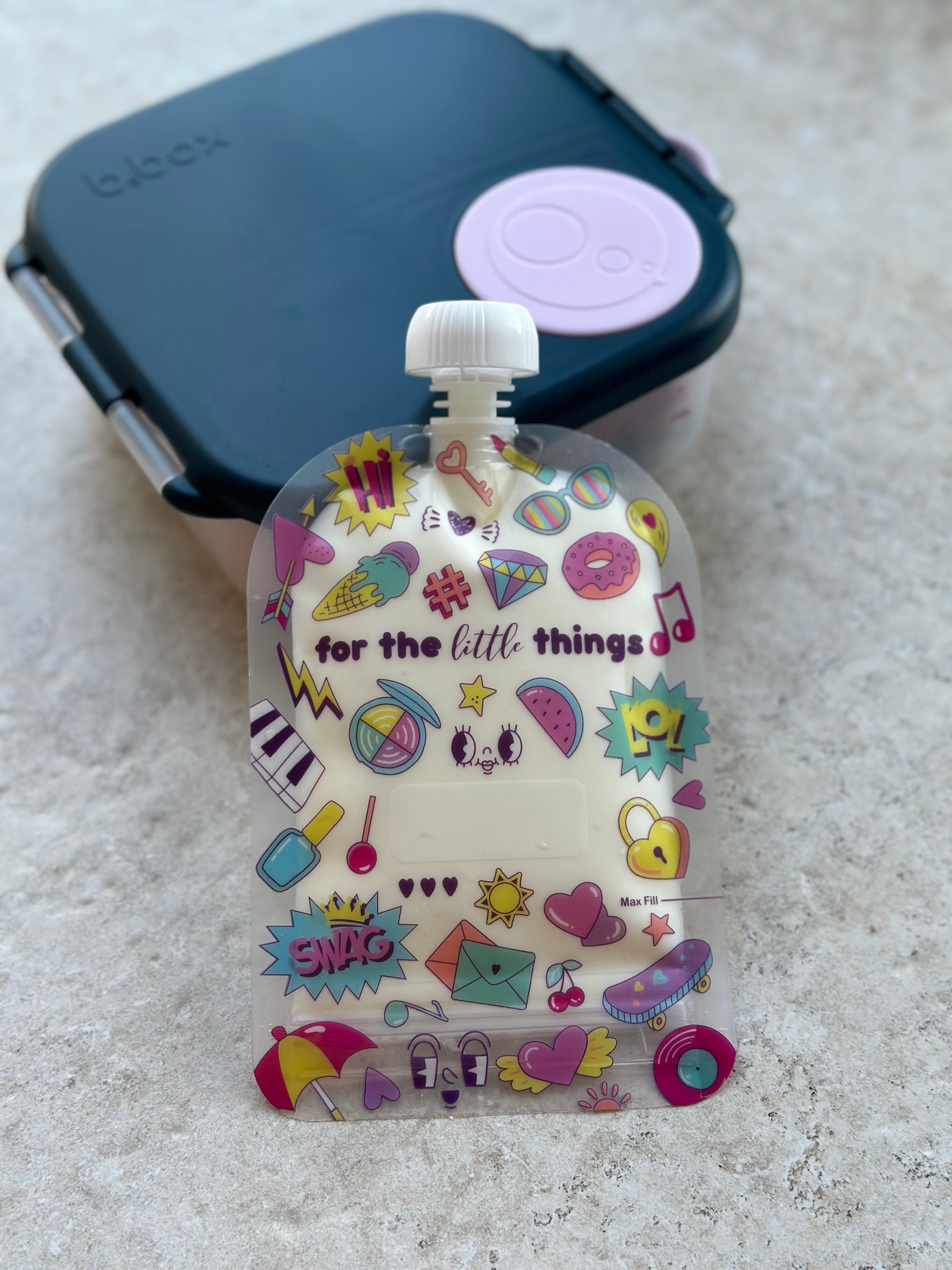
Simply buy a large tub of yoghurt and portion it into Sinchies reusable food pouches. Add fresh fruit puree if you’d like to create your own flavoured yoghurt.
It’s an easy way to:
-
Save money compared with buying individual pouches
-
Reduce single-use packaging waste
-
Choose the yoghurt and ingredients that suit your family
-
Keep the familiar pouch format kids enjoy
-
Prepare several serves at once
Sinchies reusable pouches are easy to fill and easy to clean, making weekly yoghurt prep simple.
The final word
Flavoured yoghurt pouches aren’t something parents need to fear. They’re convenient, contain useful nutrients and can make busy family life easier.
But with more than 30 strawberry options available, it pays to turn the pouch around and compare:
-
The ingredients
-
Added sugar and total sugar
-
Calcium
-
Protein
-
Price per 100g
For an everyday option, plain yoghurt with fresh fruit is difficult to beat. Buying it in a larger tub and filling reusable pouches can also help your family save money, reduce waste, and keep it fun!
Ultimately, the best yoghurt is one that works for your child, your budget and your family’s routine.
Special thanks to Daily Serve Nutrition for researching and creating the original strawberry yoghurt pouch comparison.




Leave a comment